A faucet aerator is a small part, but the wrong size can stop a simple repair cold. It screws onto the spout, mixes air with water, and can help reduce splashing. Choosing one is not just about matching the faucet’s appearance. Thread diameter, thread direction, and whether the aerator sits inside or outside the spout all matter.
So, what size aerator do I need for my faucet? Start by checking the existing aerator, if it can be removed. Common options include 15/16-27 male, 55/64-27 female, 13/16-27 female, and metric M22 or M24 threads. These labels describe different fits, not interchangeable styles. A ruler can help, but measuring across the threads may be confusing. A coin or a phone photo beside the part can provide a useful reference. Better still, take the old aerator to a hardware store and compare it directly.
This guide looks at five common faucet aerator sizes and explains where each may fit. It also covers simple ways to identify thread type, check recessed housings, and avoid buying by guesswork alone. Small differences matter. A few millimeters can mean a leak or no connection at all. Faucet designs vary, so confirm the manufacturer’s specifications when available. Even careful measurements can feel fiddly. That’s normal. Expect to double-check.
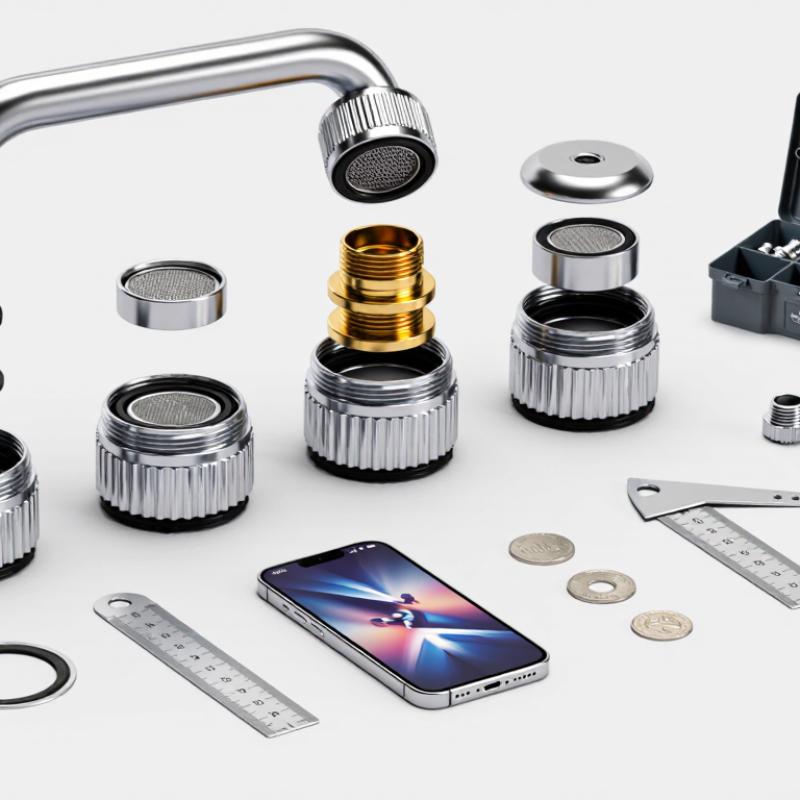
Identify Aerator Styles: Standard, Junior, Metric, Swivel, and Cache
Standard, junior, metric, swivel, and cache describe different aerator styles, not just five interchangeable sizes. Standard aerators use common male or female threads. Junior models are smaller and may fit compact faucets. Metric aerators follow measurements in millimeters, so a close-looking standard thread may still fail to fit. Check the faucet opening carefully.
Swivel aerators have a movable joint that helps direct water toward the sink. Cache aerators sit recessed inside the faucet spout and usually need a matching removal key. They can be easy to overlook. The names still feel confusing, even when the parts are side by side.
Tips: Unscrew the old aerator and measure its diameter. Note whether its threads are inside or outside. For a cache style, check the recess before buying a key. Keep the old part nearby for comparison; a ruler can help, but thread fit matters too.
A correct fit should screw in smoothly by hand. Don’t force it. If the threads catch or wobble, stop and recheck the style and measurement. Faucet openings vary, so the label alone may not settle the question. A sample part or clear close-up can help confirm the match.
Measure Threads: 15/16″-27M, 55/64″-27F, 13/16″-27M, and 3/4″-27F
Faucet aerators commonly use four nominal thread sizes: 15/16″-27M, 55/64″-27F, 13/16″-27M, and 3/4″-27F. The number after the dash means 27 threads per inch. M means male threads on the aerator; F means female threads. A close guess can still leak or refuse to turn. Measure carefully.
Remove the old aerator and check the faucet spout. External threads usually need a female aerator, such as 55/64″-27F or 3/4″-27F. Internal threads usually need a male aerator, such as 15/16″-27M or 13/16″-27M. Use a ruler or calipers to measure across the threads, not the aerator’s outer rim. The two male sizes look deceptively similar. That caught me once.
Clean off mineral buildup before measuring, since deposits can distort the reading. Match both the diameter and thread direction; all four options listed here share the same 27-thread pitch. If the measurement falls between sizes, recheck with the aerator removed and the spout dry. Older fixtures can be worn, and measurements are not always neat. Don’t force the fit.
Compare Metric Fits: M22×1 Male and M24×1 Female Aerator Threads
The labels M22×1 male and M24×1 female describe the aerator’s own thread, not the faucet’s. M22 means an outside thread diameter of about 22 millimeters; M24 means about 24 millimeters. The “1” indicates a one-millimeter thread pitch. Small difference. Still, the threads will not interchange.
An M22×1 male aerator usually fits a faucet outlet with a matching female thread. An M24×1 female aerator usually fits an outlet with matching male threads. Check the faucet before ordering: look inside the spout for internal threads, or around its outer edge for external threads. A ruler can help, but calipers give a more reliable diameter reading. Measure across the thread crests, not the smooth rim. Worn or recessed threads can make measurements misleading.
Before installation, confirm the thread direction and compare the old aerator, if available. The washer should sit flat, and the aerator should turn smoothly by hand. Stop if it catches; forcing it can damage the faucet threads. A snug fit is enough. I would recheck the size rather than tighten harder—this small detail is easy to overlook.
Match Bathroom Flow: EPA WaterSense Faucets Use No More Than 1.5 gpm at 60 psi
Choosing an aerator involves two separate questions: Will it fit, and will its flow suit the sink? EPA WaterSense-labeled bathroom faucets use no more than 1.5 gallons per minute at 60 psi. That figure is a tested limit, not a guarantee of identical flow in every home. Pressure matters. Older pipes, partly closed valves, or a long supply line can change what reaches the faucet.
Common aerator threads include 15/16-inch male and 55/64-inch female sizes; some fixtures use metric threads instead. These measurements describe the aerator connection, not its flow. Unscrew the existing piece and compare its threads, or measure its diameter before buying a replacement. A small mismatch can cause drips or prevent a secure fit. Don’t guess from appearance alone.
For a bathroom basin, a 1.5-gpm aerator can help match the WaterSense flow benchmark while keeping a steady stream for handwashing. If the stream splashes or feels weak, check the screen for mineral buildup and confirm your household pressure before choosing a higher-flow part. The printed number is useful, but comfort at the sink matters too. I may be giving the rating too much attention; a poorly fitting aerator can waste water through leaks, even when its flow rating looks right.
5 Best Faucet Aerator Sizes: What Size Do I Need? — Match Bathroom Flow: WaterSense-Labeled Faucets Use No More Than 1.5 gpm at 60 psi
| Common Size |
Thread Configuration |
Typical Faucet Fit |
Flow Options to Look For |
How to Choose |
| 15/16"-27 |
Male-threaded aerator |
Faucet outlet with internal (female) threads |
Common options include 1.0, 1.5, and 2.2 gpm |
A common full-size choice for many faucets. Confirm the outlet threads and desired flow before buying. |
| 55/64"-27 |
Female-threaded aerator |
Faucet outlet with external (male) threads |
Common options include 1.0, 1.5, and 2.2 gpm |
Often used when the faucet has threads on the outside of its spout. Match the thread direction as well as the diameter. |
| 13/16"-27 |
Male-threaded aerator |
Smaller faucet outlet with internal threads |
Flow depends on the specific aerator; check its listed rating |
A smaller, sometimes called junior, size. Measure the outlet rather than assuming a full-size aerator will fit. |
| 3/4"-27 |
Female-threaded aerator |
Smaller faucet outlet with external threads |
Flow depends on the specific aerator; check its listed rating |
May fit compact faucets with external threads. Verify both the nominal size and thread configuration. |
| M24 × 1 |
Metric male-threaded aerator |
Faucet outlet with matching internal metric threads |
Flow depends on the specific aerator; check its listed rating |
A metric option found on some faucets. Do not assume it is interchangeable with a similarly sized U.S. thread. |
Fit and flow tip: Measure the faucet outlet and check whether its threads are inside or outside. Aerator size identifies the fit, not the flow rate. For a WaterSense-labeled bathroom sink faucet, the maximum flow is 1.5 gallons per minute (gpm) at 60 psi; the aerator’s rated flow and the faucet’s certification determine actual performance.
Check Kitchen Flow: U.S. Federal Standards Set a 2.2 gpm Maximum at 60 psi
A faucet aerator has two jobs: it must fit the spout and deliver a useful flow. In the United States, federal standards set a 2.2 gallons-per-minute maximum at 60 psi for many kitchen faucets. That figure is a ceiling, not a promise that every tap will reach it.
Pressure matters. Household pressure can differ, and a partly clogged screen may slow the stream. To check your kitchen flow, place a marked container beneath the faucet and run cold water for one minute. Measure the collected water in gallons. For a shorter test, collect water for 15 seconds and multiply the amount by four. Keep the faucet setting consistent. Small test errors happen; repeat the measurement if the result seems surprising.
Use the flow reading to choose an aerator that matches your needs, but check the spout’s thread size and direction before buying. A lower-flow insert may save water, yet it can make filling a large pot feel slow. I would not judge performance from the label alone. Watch the stream while rinsing a plate, then decide whether the balance feels right.
Conclusion
Choosing the right faucet aerator starts with identifying its style: standard, junior, metric, swivel, or cache. Then check the faucet’s thread size and whether the connection is male or female. Common U.S. sizes include 15/16″-27M and 13/16″-27M for male aerators, and 55/64″-27F and 3/4″-27F for female aerators. Metric fittings commonly use M22×1 male or M24×1 female threads. If you’re wondering, “what size aerator do I need for my faucet,” compare the faucet’s measurements and thread direction with the aerator specifications before buying; appearance alone may not reveal a compatible fit.
Also consider the faucet’s intended water flow. Bathroom faucets that meet EPA WaterSense criteria use no more than 1.5 gallons per minute at 60 psi, while U.S. federal standards set a maximum of 2.2 gallons per minute at 60 psi for kitchen faucets. Select an aerator that fits correctly and suits the flow needs of the sink.

 Flow Faucet