How to Prevent Faucet Corrosion in Coastal Areas 2026?

Time:2026-10-26 Author:Isabella
0%

Coastal faucets face an aggressive mix of salt spray, humidity, and mineral-rich water. Tiny salt crystals can settle around handles, aerators, and cartridge joints. Over time, they attract moisture and accelerate pitting, discoloration, and stiff movement. This introduction explains how to prevent faucet corrosion in coastal areas through practical, evidence-based maintenance.

Dr. Reza Javaherdashti, a recognized corrosion expert, emphasizes, “Corrosion control begins with understanding the environment.” That principle matters near the sea. A faucet that looks clean may still hold chloride residue beneath its base ring. Rinsing exposed surfaces with fresh water removes salt before it concentrates. Drying the faucet afterward is equally important. Use a soft cloth, not abrasive pads. Inspect the aerator monthly. Check hidden threads and supply connections every few months.

Material selection also deserves careful attention. Marine-grade stainless steel, durable brass, and corrosion-resistant internal components generally perform better than low-quality plated alloys. However, no finish is permanent. I have seen premium faucets develop spots when saltwater remained trapped under decorative collars. That detail is easy to miss. It should not be.

A simple care record can improve reliability in vacation homes and seaside hotels. Note cleaning dates, visible pitting, loose fittings, and changes in water flow. Replace damaged washers promptly. Avoid harsh chlorine cleaners unless the manufacturer approves them. Maintenance routines can fail when they become too complicated. Keep the process realistic, consistent, and easy to inspect. Even small improvements can extend faucet service life in demanding coastal conditions.
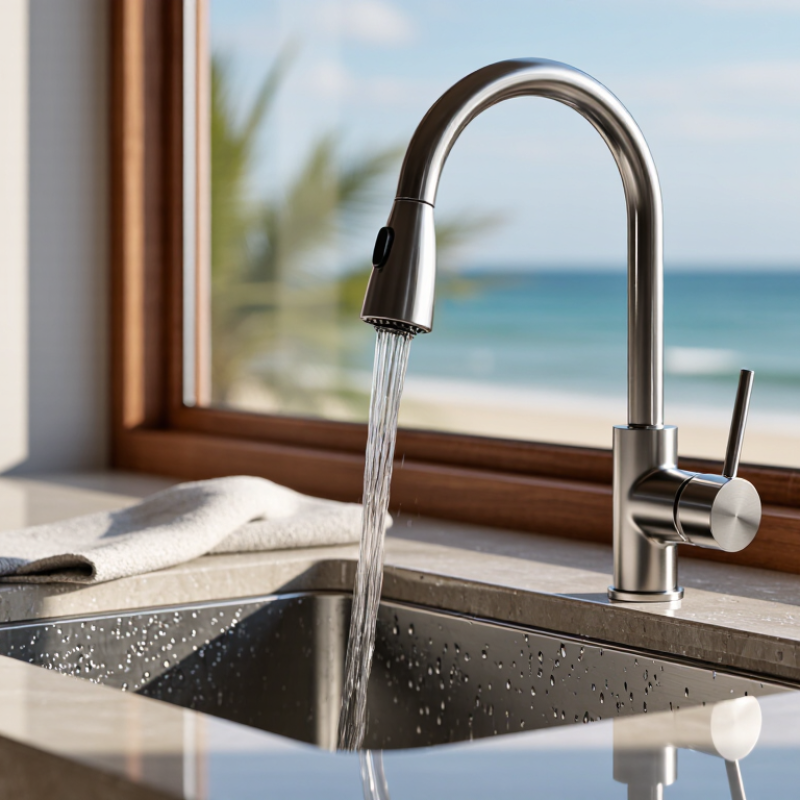
How to Prevent Faucet Corrosion in Coastal Areas 2026?

Understanding Why Coastal Air Accelerates Faucet Corrosion

Coastal air accelerates faucet corrosion because it carries moisture, chloride particles, and acidic pollutants. Ocean water contains about 35 parts per thousand of dissolved salts, according to the National Oceanic and Atmospheric Administration. Wind can deposit these salts on faucet joints, aerators, handles, and hidden threads. Once humidity forms a thin water film, chloride ions disturb protective metal layers and promote pitting. Small pits can deepen beneath apparently clean surfaces.

The NACE IMPACT study estimated global corrosion costs at approximately 2.5 trillion US dollars annually. Its findings also show that better corrosion management can reduce major losses significantly. ISO 9223 evaluates atmospheric corrosivity through chloride deposition, sulfur dioxide, humidity, and wetness duration. These factors matter near beaches, even when a faucet is installed indoors beside an open window. Coastal homes often need more frequent rinsing with fresh water, careful drying, and inspection around seams.

Use compatible corrosion-resistant materials, but do not assume “stainless” means immune. Salt residue can remain under decorative collars and around cartridge openings. A monthly inspection is practical in exposed locations; weekly cleaning may be wiser within a short distance of breaking waves. Avoid harsh acidic cleaners, which can strip protective finishes. A soft cloth and fresh water are safer starting points. Perfect prevention is unrealistic. Maintenance schedules are often too optimistic, especially after storms or long periods of humid, salty air.

Selecting Corrosion-Resistant Faucet Materials and Protective Finishes

How to Prevent Faucet Corrosion in Coastal Areas 2026?

Salt air carries chloride particles that settle on faucet surfaces, especially near open windows and balconies. Material selection matters more than appearance. For coastal homes, 316 stainless steel usually offers stronger chloride resistance than standard 304 steel. Solid brass can also perform well, but its alloy quality and water chemistry deserve careful checking. Low-quality brass may develop dezincification, leaving pale patches or weak internal parts.

Protective finishes add another defense. Physical vapor deposition creates a dense surface layer that resists scratches and moisture better than many decorative coatings. Ceramic finishes can work well when properly bonded and maintained. Ask suppliers about coating thickness, surface preparation, and corrosion-test results. A polished finish is not automatically a durable finish. Inspect corners, threads, and the base carefully; these areas often receive thinner coverage.

Maintenance still matters. Rinse salt deposits with fresh water every few weeks, then dry the faucet with a soft microfiber cloth. Avoid chlorine bleach, abrasive powders, and rough sponges. They can damage the finish and expose the metal underneath. During inspections, look for bubbling, dark pinholes, or green residue around joints. Replace worn seals early. One practical lesson is easy to miss: even premium material can corrode when trapped saltwater remains under a loose escutcheon. I would also question vague claims such as “rust-proof.” No faucet is maintenance-proof, and coastal exposure varies sharply between sheltered streets and waterfront buildings.

How to Prevent Faucet Corrosion in Coastal Areas in 2026

Pitting Resistance Equivalent Number (PREN) is an established indicator used to compare the resistance of stainless-steel alloys to chloride-induced pitting. Higher values generally indicate better performance in salt-laden coastal environments.

For coastal faucets, 316L stainless steel is typically more suitable than 304 stainless steel because its molybdenum content improves chloride resistance. Duplex grades provide even higher resistance. Protective finishes such as PVD, powder coating, or high-quality plating can protect the surface, but they should be combined with proper cleaning, passivation, and regular removal of salt deposits.

Installing Faucets to Reduce Salt Exposure and Moisture Traps

How to Prevent Faucet Corrosion in Coastal Areas 2026?

Installing faucets correctly can reduce salt exposure, standing water, and hidden moisture traps. Coastal air carries chloride particles that settle on metal surfaces and accelerate corrosion. ISO 9223 classifies coastal atmospheres by corrosivity and chloride deposition, showing why location matters during installation. Avoid placing faucets directly beside open windows, exterior doors, or splash-prone sinks. A small distance can reduce repeated salt contact.

Choose corrosion-resistant components suited to the site, such as marine-grade stainless steel where practical. However, material selection alone is not enough. Seal the faucet base carefully, but avoid creating a sealed pocket that holds water underneath.

Use a sloped mounting surface, flexible sealing washers, and accessible drainage paths. The weak point is often the seal, not the metal. Moisture needs somewhere to escape.

Rinse exposed surfaces with fresh water after heavy sea wind or storm conditions. Dry the base and handle joints with a soft cloth. Avoid abrasive pads, which can damage protective finishes and leave rough corrosion sites.

The NACE IMPACT study estimated global corrosion costs near 3.4% of global GDP, proving that prevention has measurable economic value.

Still, no installation is perfect. Inspect hidden connections every few months, especially beneath countertops. A neglected moisture trap can defeat expensive materials and careful planning.

Cleaning and Maintaining Faucets in Coastal Environments

Salt air can damage faucet finishes faster than many homeowners expect. I once ignored a faint orange mark near a handle, and it spread beneath the surface. Coastal maintenance needs regular attention, not occasional polishing.

Rinse exterior surfaces with fresh water once or twice weekly, especially after windy days. Salt crystals can remain around the spout, joints, and handle bases. Use a soft cloth with warm water and mild dish soap. Avoid abrasive pads, strong acids, and chlorine products. They may remove protective coatings and leave tiny scratches. Dry every surface carefully, including hidden edges. Moisture trapped under a handle can encourage corrosion.

Check the aerator monthly for white deposits, reduced flow, or dark particles. Remove it gently, soak it in diluted white vinegar briefly, then rinse it thoroughly. Do not leave delicate finishes soaking without checking the manufacturer’s care guidance. Inspect supply connections and seals for dripping water. A small leak can keep metal constantly wet. For moving parts, use only a small amount of plumbing-grade silicone lubricant where appropriate. I have sometimes cleaned too aggressively; more pressure did not produce better results. If pitting, loose handles, or persistent leaks appear, consult a qualified plumber before the damage reaches internal components.

How to Prevent Faucet Corrosion in Coastal Areas 2026? - Cleaning and Maintaining Faucets in Coastal Environments

Maintenance Dimension Recommended Action Recommended Frequency Coastal-Risk Reason Important Precaution
Fresh-water rinsing Rinse exposed faucet surfaces with clean fresh water and dry them with a soft lint-free cloth. Daily in exposed outdoor areas; after salt spray or storms Salt deposits contain chloride ions that can remain on wet metal and promote localized corrosion. Do not allow salty water to air-dry repeatedly on the finish.
Routine washing Clean with lukewarm water and a small amount of mild, pH-neutral liquid soap using a soft microfiber cloth. Weekly; increase to two or three times per week during heavy salt exposure Regular cleaning removes salt, dust, sunscreen residue, and other deposits that retain moisture. Rinse thoroughly so soap residue does not form a film.
Drying and water spots Wipe the faucet, base, seams, handles, and aerator area dry after cleaning or use. After each cleaning; preferably after daily use Standing moisture increases the time that chloride-contaminated water contacts the surface. Use a soft cloth rather than paper towels or abrasive pads.
Hard-water scale Remove mineral deposits gently with a manufacturer-approved descaling method and rinse immediately. Monthly or when visible scale appears Scale can trap moisture and chloride residue against the finish. Never leave acidic cleaners on plated, polished, or coated surfaces.
Aerator and outlet Inspect the aerator for salt, scale, debris, or discoloration; clean removable parts with fresh water and a soft brush. Every 1–3 months The outlet remains wet and can collect deposits that restrict flow or conceal corrosion. Keep removed parts organized and check seals before reassembly.
Joint and base inspection Check around the spout base, handle, mounting area, seams, and fasteners for pitting, bubbling, green deposits, or rust staining. Monthly; immediately after severe storms Crevices retain moisture and have less oxygen exchange, conditions that can accelerate localized corrosion. Repair leaks promptly because continuous wetting increases corrosion risk.
Cleaning chemicals Use only diluted, surface-compatible cleaners and follow the faucet manufacturer’s care instructions. Whenever cleaning Strong acids, chlorides, and oxidizers may damage protective finishes or increase metal attack. Avoid bleach, hydrochloric acid, abrasive powders, steel wool, and chlorine-containing cleaners.
Vinegar and acidic solutions Use only when the surface-care instructions permit it, apply briefly, and rinse completely with fresh water. Occasionally for compatible uncoated components Acids can dissolve scale but may dull, stain, or damage some plated and coated finishes. Do not mix acids with bleach or other cleaning chemicals.
Finish protection After cleaning and drying, use only a surface-safe protective product if the care instructions allow it. Every 1–3 months or as directed A compatible protective layer can reduce direct contact between deposits and the finish. Avoid waxes or oils on handles, touch surfaces, aerators, and areas where residue can accumulate.
Material compatibility Treat stainless steel, chrome-plated surfaces, brass, and coated finishes according to their specific care requirements. Review during installation and whenever a cleaner is changed Different metals and coatings have different resistance to chloride exposure, acids, abrasion, and galvanic contact. Do not assume that a cleaner safe for one material is safe for another.
Storm and salt-spray response Rinse the entire exposed faucet assembly with fresh water, clean it gently, and dry it after coastal storms or strong winds. Within 24 hours when practical Wind-driven seawater can deposit concentrated salts on metal and surrounding hardware. Inspect hidden mounting areas and nearby screws, not only visible surfaces.
Early corrosion response At the first sign of pitting, blistering, rust staining, or green deposits, stop using abrasive methods and arrange a compatible repair or replacement assessment. Immediately Localized corrosion can progress beneath coatings and may eventually cause leaks or component failure. Do not polish aggressively because removing the protective finish can expose fresh metal.

Practical rule: In coastal environments, frequent fresh-water rinsing, gentle cleaning, thorough drying, and prompt leak repair are the most reliable ways to reduce salt-related faucet corrosion.

Inspecting and Repairing Early Signs of Corrosion Damage

Coastal air can damage a faucet long before corrosion becomes obvious. Salt particles settle around the spout, handle, joints, and supply connections. During monthly checks, wipe the faucet dry and inspect it under bright light. Look for white crust, green or brown stains, bubbling finish, pitted metal, or rough handle movement.

Early damage needs careful cleaning, not aggressive sanding. Turn off the water supply before removing the aerator or handle. Photograph each part before disassembly. This simple step prevents confusion during reassembly.

Soak removable metal parts in diluted white vinegar only when the manufacturer allows it. Rinse thoroughly, dry completely, and use a soft nylon brush around threads. Avoid steel wool, chlorine products, and sharp tools. They can expose fresh metal and accelerate future damage.

Replace cracked washers, damaged cartridges, and corroded screws with compatible parts. A leaking connection should not be ignored, even if the drip seems minor. Saltwater can travel into cabinet panels and create hidden moisture damage.

I once treated a faucet that looked acceptable from above, but its underside was deeply pitted. The visible finish had distracted me. That mistake reinforced the need to inspect beneath the sink, around the shutoff valves, and inside threaded connections.

If corrosion has eaten through the faucet body, repair is usually unreliable. A qualified plumber can confirm the source, check water pressure, and install the correct replacement safely.

FAQS

Where should a faucet be installed in a coastal home?

Keep it away from open windows, exterior doors, and splash-prone areas. Even a small distance reduces repeated salt exposure.

Which faucet materials resist coastal corrosion better?

Choose corrosion-resistant stainless steel and suitable protective components. Material alone is not enough. A poor seal can trap water beneath the faucet base.

How can I prevent moisture from collecting under the faucet?

Use flexible sealing washers and a slightly sloped mounting surface. Keep drainage paths accessible. Water needs somewhere to escape.

How often should coastal faucets be rinsed?

Rinse exposed surfaces once or twice weekly with fresh water. Rinse again after strong winds or storms. Salt crystals often remain around spouts, joints, and handles.

What is the safest way to clean a faucet finish?

Use warm water, mild dish soap, and a soft cloth. Avoid abrasive pads, strong acids, and chlorine products. Scratches can create small sites for corrosion.

How should I dry a faucet after cleaning?

Dry the spout, handle joints, base, and hidden edges carefully. Moisture under a handle can encourage corrosion. Dry it fully.

How can I check for early faucet problems?

Inspect the aerator monthly for white deposits, weak flow, or dark particles. Check supply connections and seals for dripping water. A tiny leak can keep metal wet continuously.

What should I do when corrosion or leaks continue?

Remove light deposits gently and rinse thoroughly. Use only a small amount of suitable silicone lubricant on moving parts. If pitting, loose handles, or persistent leaks appear, contact a qualified plumber. I once cleaned too aggressively. More pressure was not better.

Conclusion

Coastal air contains salt, moisture, and other particles that can settle on faucet surfaces, speed up oxidation, and damage protective coatings. Learning how to prevent faucet corrosion in coastal areas begins with choosing materials designed to resist moisture and salt exposure, such as corrosion-resistant metal alloys or faucets with durable protective finishes. Proper installation also matters: seal connection points carefully, avoid leaving water trapped around the base, and position the faucet to reduce direct contact with sea spray and standing water.

Regular maintenance can significantly extend faucet life. Rinse the faucet with fresh water to remove salt deposits, dry it with a soft cloth, and use a mild, non-abrasive cleaner when needed. Avoid harsh chemicals and rough tools that may scratch the finish. Inspect regularly for discoloration, pitting, loose seals, leaks, or flaking surfaces. Addressing these early signs promptly through cleaning, part replacement, or professional repair can prevent minor corrosion from developing into serious damage.

Isabella

Isabella

Isabella is a dedicated marketing professional with a sharp focus on driving brand growth and engagement through strategic content creation. With an extensive background in digital marketing, she combines her passion for storytelling with her keen understanding of industry trends to deliver......