Rust on a chrome faucet can look dramatic, even when the mark is only iron residue sitting on the surface. The distinction matters: aggressive scrubbing may scratch the shiny finish while leaving the real cause untouched. The U.S. Environmental Protection Agency’s Secondary Drinking Water Standards list iron at 0.3 milligrams per liter, a level used for aesthetic concerns such as staining and taste. That figure is a benchmark, not proof that your faucet or water supply is unsafe.
This guide explains how to remove rust stains from a chrome faucet using measured, low-risk steps: identify the stain, try a soft cloth and mild cleaner, and rinse and dry the area carefully. Moen’s faucet-care guidance likewise recommends mild soap, water, and a soft cloth, while warning against abrasive cleaners. A small test spot is sensible. So is patience. The first wipe may change very little.
For a practical maintenance principle, This Old House plumbing expert Richard Trethewey’s advice is best represented as a paraphrase, not a verified verbatim quotation: use the gentlest effective method and avoid unnecessary force. That caution matters around the faucet base, where water can linger and damage may be less visible. These seven tips focus on safe household cleaning, not harsh chemicals or miracle fixes. Some stains may return. If they do, check for a persistent moisture source or iron in the water before scrubbing harder.
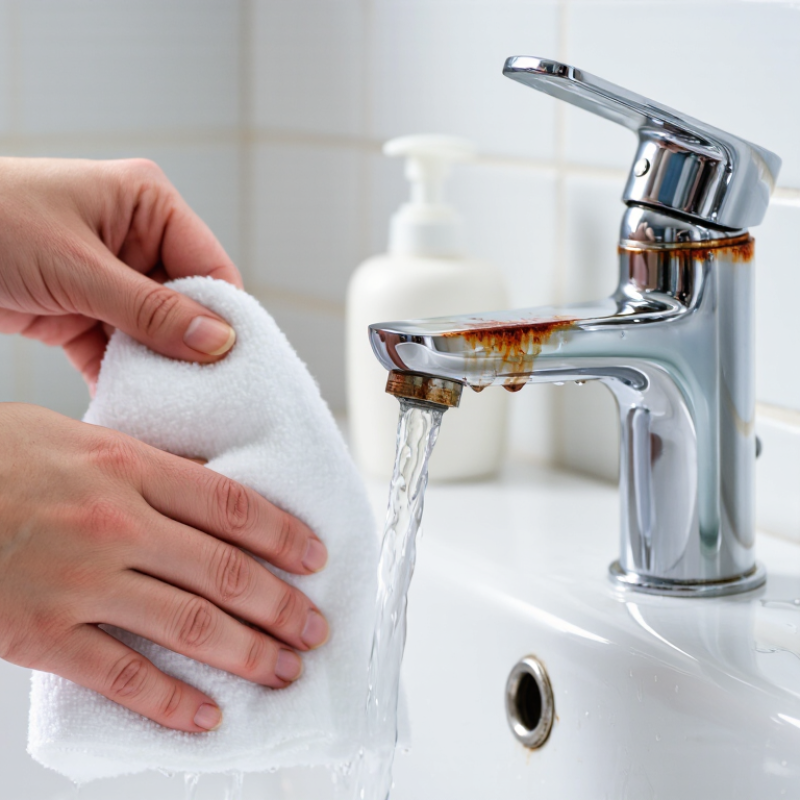
Rust-colored marks on a chrome faucet are not always rust from the faucet itself. Chrome resists corrosion, so orange or brown spots often come from iron in the water or particles from nearby steel. Look closely. Check whether the mark is a surface deposit or a pit in the metal. A stain that wipes away with a damp cloth may be loose residue; a rough, dark spot may indicate damaged plating. A quick guess can be wrong.
Tip: Dry the faucet, then inspect the stain in bright light. Look around the base, spout joints, and aerator, where water can collect. Notice whether the mark has a clear orange edge or appears as a dull patch beneath the shiny surface. If it returns after cleaning, the water or a nearby metal object may be the source. It is easy to jump straight to scrubbing; that can make a small problem worse.
Tip: Check the chrome finish before using any cleaner. Look for flaking, fine scratches, or exposed gray metal, especially near handles and seams. Try a mild soap solution on a hidden area and wipe with a soft cloth. Avoid abrasive pads and harsh acids; they can dull or strip the finish. If the surface feels pitted, stop rubbing and consider getting advice from a plumbing professional. A gentler approach may take longer, but it protects the plating.
Before treating a rust stain, set out a clean microfiber cloth, a soft toothbrush, mild dish soap, and a small bowl of warm water. Keep it simple. Avoid steel wool, scouring powder, and stiff brushes; they can scratch chrome or leave it looking dull. A few cotton swabs can help reach the narrow seam around the faucet base.
Clear the counter and place an old towel around the sink to catch drips. If the faucet sits beside stone, painted wood, or another delicate surface, cover that area with a plastic sheet or extra towel. This small step is easy to skip, but cleaning solution can run farther than expected. Wear household gloves if your hands are sensitive, and keep different cleaners separate.
Mix a little dish soap into the warm water. Dampen the cloth rather than soaking it, then test the solution on a discreet part of the faucet. I sometimes want to scrub a rust spot right away, but pressure can damage a thin chrome finish. If the mark remains after gentle wiping, pause and check the faucet’s care instructions before trying another product. A rust stain can sometimes signal that the chrome coating is already worn.
Typical pH ranges can help compare common cleaning options. For a gentle starting point, use water or diluted mild dish soap, and protect nearby surfaces with a towel. Actual pH varies with concentration and formulation; check product directions and your faucet-care guidance.
Before treating a rust-colored mark, wash the faucet to remove grit, soap film, and loose mineral deposits. Wet a soft microfiber cloth with warm water and a few drops of mild dish soap. Wipe the spout, handle, and the narrow seam around the faucet base. Dirt often hides there. Use your fingertips through the cloth to loosen residue, rather than scrubbing with a rough pad that can dull chrome. Keep it gentle. Rinse the cloth often so trapped particles do not drag across the finish.
Rinse the faucet with clean water, including the underside of the spout, then dry it with a fresh, lint-free towel. This prevents new water spots and makes remaining orange marks easier to see. Look closely under bright light. A mark that remains after washing may be a deposit or damaged plating, not ordinary dirt; cleaning alone may not remove it. I would not rush to stronger cleaners at this stage. Check the faucet’s care instructions before choosing a stain treatment, since finishes can vary. A little patience here helps avoid turning a small stain into a scratched surface.
Rust-colored marks on a chrome faucet may be mineral or iron deposits, not rust spreading through the chrome itself. Start by washing the area with warm water and a little dish soap. Pat it dry so you can see the stain clearly. Choose a rust remover that specifically says it is safe for chrome, and read its label before applying it. Keep it brief.
Test the product on a small, hidden spot first. If the finish stays bright, apply a small amount with a soft cloth, following the stated contact time. Do not use steel wool, scouring powder, or a rough scrub pad; these can scratch the thin chrome layer. No hard scrubbing. If the stain lifts slowly, pause rather than leaving the remover on longer than directed. That can feel frustrating, but a damaged finish is harder to fix than a stubborn mark.
Rinse the faucet thoroughly with clean water, including around the handle base and seams where residue can collect. Dry it with a soft towel to prevent new water spots. If the chrome looks dull, pitted, or begins flaking, stop cleaning; the corrosion may be beneath the plating. Avoid mixing cleaners, and wear gloves if the product label recommends them. A gentle second treatment is safer than one aggressive pass.
| Tip | Method and Materials | How to Apply | Suitable For | Important Caution |
|---|---|---|---|---|
| 1. Start with mild soap | Warm water and a few drops of mild dish soap | Wet a soft cloth, wipe the stained area gently, then rinse with clean water. | Fresh surface marks and loose residue | Do not use scouring powder or a rough sponge; these can scratch the chrome finish. |
| 2. Wipe with microfiber | Clean, soft microfiber cloth | After washing, gently buff the area without pressing hard. Use a clean section of cloth as needed. | Light stains and cleaning away loosened residue | Abrasive pads and steel wool may damage or dull the finish. |
| 3. Try a gentle baking-soda paste | Baking soda and water | Mix into a thin paste, test on an inconspicuous spot, then lightly dab with a soft damp cloth. Rinse promptly. | Stubborn surface residue that remains after soap and water | Use minimal pressure. Baking soda is mildly abrasive and may scratch chrome if rubbed hard. |
| 4. Use diluted white vinegar only with care | Equal parts white vinegar and water; soft cloth | Test a hidden spot first. Briefly dab the stain, rinse thoroughly, and dry; do not let the solution sit. | Some surface deposits that do not respond to mild soap | Acids can damage chrome or nearby finishes. Avoid prolonged contact and do not use on damaged or peeling plating. |
| 5. Choose a remover labeled safe for chrome | A rust-removal product whose label specifically permits use on chrome | Follow the product directions, test a hidden area first, and rinse the faucet thoroughly afterward. | Persistent stains when gentle cleaning is not effective | Do not assume every rust remover is suitable for chrome. Never mix cleaning products. |
| 6. Avoid scraping the stain | Soft cloth and water | Keep the area damp and wipe gently rather than using a blade, metal tool, or abrasive pad. | Any stain that seems difficult to remove | If the mark does not lift with gentle cleaning, scraping may cause permanent damage to the plating. |
| 7. Rinse, dry, and check the finish | Clean water and a dry, soft cloth | Rinse off all cleaner residue, dry the faucet, and inspect the area. Repeat gentle cleaning only if the finish remains intact. | After every cleaning method | If the chrome is pitted, flaking, or visibly damaged, the discoloration may be beneath the finish and cleaning may not remove it. |
Note: Rust-colored marks can come from iron deposits on the surface. If the chrome plating itself is damaged, the stain may not be removable with household cleaning.
After removing the rust stain, rinse away any cleaner residue with a damp cloth. Then dry the faucet completely with a clean microfiber towel, including the seam around the handle and the underside of the spout. Water left in those narrow spots can leave fresh marks. Let it dry. Buff the chrome gently with a second, dry section of cloth until it looks clear, not greasy. Avoid steel wool, scouring pads, and gritty powders; they can scratch the finish and make it harder to clean later. A soft cloth is enough. If a mark remains, the chrome plating may be damaged rather than simply dirty, so repeated scrubbing is unlikely to help.
To prevent new stains, wipe the faucet after heavy use, especially if water regularly splashes onto its base. Keep wet metal objects, such as hair clips or shaving tools, off the sink ledge; small rust spots often transfer from them. Once a week, wash the faucet with mild dish soap and water, rinse, and dry it well. Hard-water deposits can hold moisture against the surface, so remove them with a cleaner labeled safe for chrome, following its directions. I’ll admit, daily wiping is easy to forget. Keep a small towel near the sink to make the habit more realistic.
No. They may come from iron in the water or particles from nearby steel.
Dry the faucet and check it in bright light. Look near the base, joints, and aerator.
Flaking, fine scratches, exposed gray metal, or rough pits may indicate damage. Stop rubbing if the surface feels pitted.
Try mild soap and water on a hidden area first. Use a soft cloth.
Avoid steel wool, scouring pads, gritty powders, and harsh acids. They can scratch or dull the finish.
Rinse away residue with a damp cloth, then dry the faucet with a clean microfiber towel. Check around seams and under the spout. Let it dry.
Wipe the faucet after heavy use, and keep wet metal items off the sink ledge. A small towel nearby can help.
The water or a nearby metal object may be the source. Damaged plating is also possible; repeated scrubbing may not help. I sometimes reach for a scrubber too quickly.
Learning how to remove rust stains from a chrome faucet starts with checking the marks and inspecting the finish. Identify whether the discoloration is surface rust or a sign that the chrome has been damaged, since harsh scrubbing can make scratches and worn areas worse. Gather gentle cleaning supplies, such as a soft cloth and a nonabrasive cleaner, and protect nearby surfaces before you begin.
Wash the faucet first to clear away dirt and mineral deposits, then use a suitable gentle method to treat the rust. Work carefully, avoid abrasive pads or aggressive chemicals, and rinse the area thoroughly so no cleaner remains. Dry the chrome completely with a soft cloth and polish it lightly to restore its shine. To help prevent new stains, wipe away moisture regularly and address drips or mineral buildup before they have time to settle.

Flow Faucet